
Tips for Avoiding Getting Scammed as a Freelancer
In 2004, The Darkness was one of the hottest bands in the country and my brother and I went to see them at the 9:30 Club in Washington, DC. As we pulled into its parking lot, a guy walked up to my window and said, “That’ll be $20.” I paid him and then parked. When I got out of the car, a parking attendant approached us and said, “That’ll be $20.” I then looked and saw the guy I paid in the distance walking down 9th Street $20 richer and felt like such a rube.
Now, I can laugh about it and I say all this to point out that we all get scammed from time to time. However, I was fortunate enough to avoid a recent scam that came my way that I am about to share.
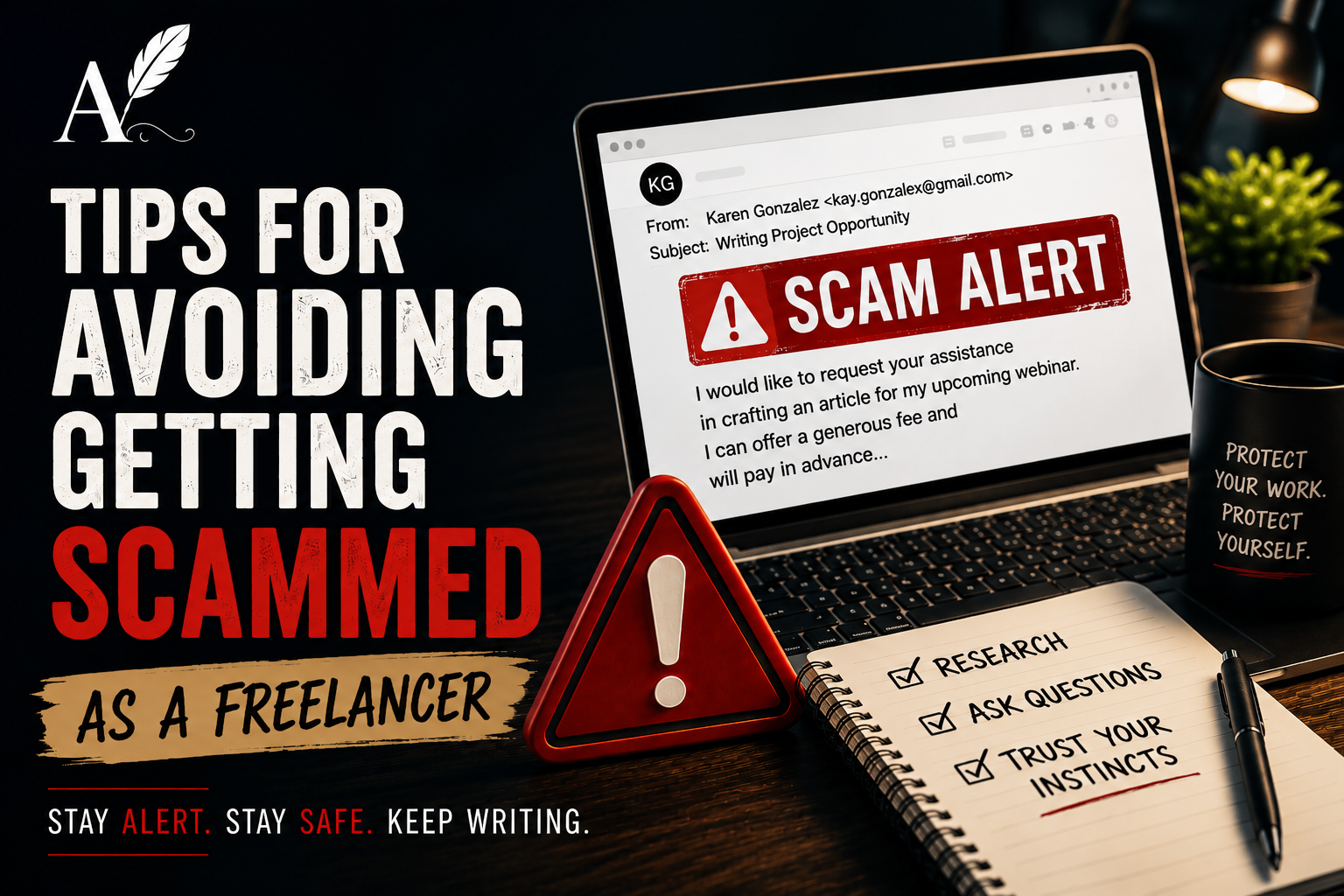
Last week, I received an email through my website from Karen Gonzalez that read: “I am Karen Gonzalez , and I am reaching out to inquire about your writing services. I would like to request your assistance in crafting an article for my upcoming webinar. I found your contact information through a Google search. Your portfolio reflects a diverse range of skills, and I believe you would be an excellent choice for this project. If you are available and interested, I would be happy to provide you with further details. I prefer to communicate via email.”
As a freelancer, I am always open to new business and I have clients who first reached out to me online (usually through LinkedIn). This message though felt a bit off and before I responded, I Googled the email with the message, kay.gonzalex@gmail.com.
Two posts immediately appeared warning that this was a scam. Kudos to Ginny Peterson and Jean Dion for flagging this for other writers. Basically, Karen offers a very generous fee for work and will pay in advance. She then sends a cashier’s check, which the writer deposits. Once that happens, Karen then aggressively contacts the writer and says the project has been canceled and that she needs the check refunded. The cashier’s check was, of course, fraudulent so if the bank does not catch it before the refund is processed, the writer is out at least a thousand dollars.
Both of these posts also have tips for avoiding scams. Here are few from me.
Research any potential client that reaches out to you. Googling email addresses can also come in very handy in these cases.
If compensation for a project from a client you have never heard of seems too good to be true based on your experience, it probably is.
Even if business is slow, you should still feel empowered to ask any potential clients questions if something does not seem right.
Hope this is helpful. In the meantime, here is a NSFW video of Jason Statham cleaning out a data center where people conduct phishing scams on senior citizens in The Beekeeper.